Composite Bonding In Christchurch: Cost, Benefits & What It Fixes

If you have a chipped front tooth, a noticeable gap, or a spot of stubborn discolouration, you do not always need months of orthodontic treatment or invasive dental surgery to achieve a radiant smile.
Composite bonding has rapidly become one of the most requested cosmetic dental procedures in Christchurch. It offers an immediate, highly aesthetic, and non-invasive way to refine your natural teeth in just a single appointment.
Whether you are preparing for a special occasion or simply want to feel more confident when you laugh and smile, here is your comprehensive guide to composite bonding at Duxton Dental—including how it works, what it costs, and whether it is the right choice for you.
What Is Composite Bonding?
Composite bonding (often referred to as cosmetic bonding or tooth bonding) is a cosmetic dental technique where a specialised, shade-matched composite resin is applied directly to the surface of your tooth.
The material used is the same high-grade, biocompatible resin used for tooth-coloured dental fillings. However, in a cosmetic setting, your dentist acts as both clinician and artist. They meticulously sculpt, layer, and shape the pliable resin over your natural tooth to restore symmetry, fill gaps, or mask imperfections.
Once the resin is shaped to perfection, a specialised blue curing light is applied to harden the material instantly. The tooth is then polished to a high sheen, matching the translucency and natural lustre of your surrounding enamel.
What Dental Issues Can Composite Bonding Fix?
Composite bonding is incredibly versatile. Because the resin is built up directly on the tooth, it allows our Riccarton dental team to address a wide range of localised aesthetic concerns without removing healthy tooth structure.
1. Chipped Or Cracked Teeth
Accidental impacts, sports injuries, or biting into something hard can easily leave jagged chips on your front teeth. Composite bonding seamlessly fills in missing tooth structure, restoring the natural shape and strength of the tooth edge.
2. Gaps Between Teeth (Diastemas)
Small gaps between front teeth can cause self-consciousness. Composite bonding can be sculpted onto the sides of adjacent teeth to close or narrow the space smoothly, giving you a more uniform smile without needing braces.
3. Persistent Tooth Discolouration
Some internal stains—caused by historical trauma, specific medications, or deep enamel defects—do not respond well to traditional teeth whitening gels. Bonding covers these stubborn spots with a natural, tooth-coloured layer.
4. Worn Down Or Short Teeth
If you grind your teeth at night (bruxism) or have naturally uneven tooth lengths, bonding can build back lost height along the biting edges, revitalising a tired or aged smile line.
5. Irregular Or Asymmetrical Tooth Shapes
Sometimes a single tooth grows smaller than the rest (such as peg laterals) or features an unusual contour. Bonding subtly alters the shape of the tooth so it blends in naturally with your neighbouring teeth.
6. Exposed Tooth Roots From Gum Recession
When gums recede, exposed tooth roots can look dark and feel overly sensitive to hot or cold drinks. Applying composite resin over the exposed root protects the delicate nerve while improving the appearance of your gumline.
The Composite Bonding Procedure: Step-By-Step
One of the greatest advantages of composite bonding is its simplicity. In the vast majority of cases, the entire procedure is completed in a single visit with no needles, no drills, and no local anaesthetic required.
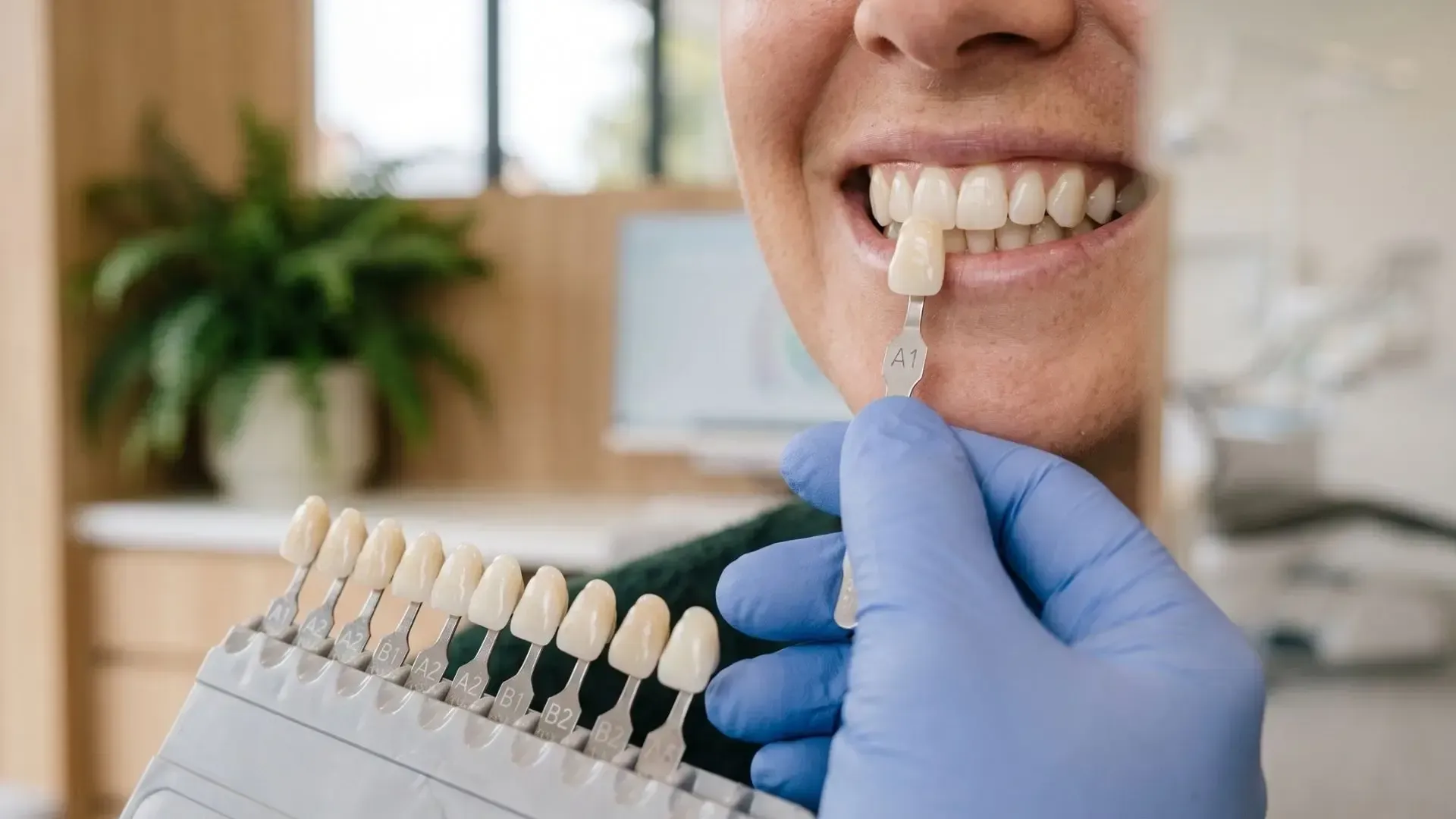
Step 1: Shade Matching & Planning
Your dentist uses a shade guide to select a resin colour that precisely matches your natural tooth enamel. If you are planning to whiten your teeth overall, we always recommend completing your whitening treatment before bonding, so the resin can be matched to your new, brighter shade.
Step 2: Surface Preparation
The surface of your tooth is gently conditioned with a mild etching gel, followed by a liquid bonding agent. This creates a microscopic texture on the enamel that allows the composite resin to fuse securely to your tooth. No natural enamel needs to be shaved down.
Step 3: Application & Sculpting
Your dentist applies the composite resin in delicate layers, carefully shaping and smoothing the material to achieve the desired length, width, and contour.
Step 4: Curing & Hardening
A high-intensity ultraviolet curing light is held over the tooth for several seconds. This instantly hardens the resin, setting the bond permanently in place.
Step 5: Polishing & Refinement
Finally, your dentist meticulously polishes the bonded area to smooth away any rough edges and match the natural shine of your surrounding teeth. You can bite, chew, and smile normally the moment you leave the dental chair.
How Much Does Composite Bonding Cost In Christchurch?
At Duxton Dental, we believe in complete financial transparency so you can make informed choices about your smile investment.
In New Zealand, the cost of composite bonding generally ranges between $250 and $600 per tooth.
The exact investment depends on several factors:
The Complexity Of The Repair: Fixing a small edge chip requires less time and material than closing a large gap or rebuilding an entire tooth surface (composite veneer).
The Number Of Teeth Being Treated: Treating multiple teeth during a single visit often optimises clinical time.
Prior Treatments Needed: If professional teeth whitening or hygiene cleans are required beforehand, these will be factored into your custom treatment plan.
Compared to porcelain veneers—which typically cost between $1,500 and $2,500+ per tooth and require laboratory fabrication—composite bonding offers an immediate, highly accessible alternative for refining your smile.

The Key Benefits Of Composite Bonding
Why are so many Christchurch patients choosing composite bonding over other cosmetic treatments?
- Immediate Results In One Visit: Unlike porcelain restorations that require digital impressions and waiting weeks for a dental lab, bonding is completed in a single appointment (usually 30 to 60 minutes per tooth).
- Completely Non-Invasive: Because composite bonding adheres directly to natural enamel, your underlying tooth remains intact. Unlike traditional crowns or veneers, there is no permanent removal of healthy enamel.
- Pain-Free & Comfortable: Because the treatment is non-invasive and stays on the outer enamel layer, injections and local anaesthetic are rarely needed.
- Highly Cost-Effective: Bonding allows you to achieve impressive aesthetic changes at a fraction of the cost of porcelain veneers or extensive orthodontic alignment.
- Easily Repairable: If a bonded edge happens to chip years down the track, your dentist can easily add fresh resin and polish it back to perfection in minutes.
Potential Disadvantages & Limitations To Consider
To ensure long-term satisfaction with your smile makeover, it is important to understand the realistic limitations of composite bonding:
- Staining Susceptibility Over Time: While modern dental resins are highly stain-resistant, composite material is slightly more porous than natural enamel or porcelain. Over time, frequent consumption of coffee, red wine, tea, or dark berries can cause subtle discolouration around the edges.
- Strength & Chipping Risk: Composite resin is extremely strong, but it is not quite as hard as natural enamel or laboratory-fired porcelain. Biting hard objects like ice, fingernails, or pen tops can chip the resin.
- Lifespan: On average, composite bonding lasts between 5 and 8 years before it may require touch-ups or repolishing. In comparison, porcelain veneers can last 10 to 15+ years with proper care.
- Not A Complete Alternative To Orthodontics: While bonding can disguise mild crowding or small gaps, it cannot correct severe bite misalignment, heavy crowding, or structural jaw issues.
Composite Bonding Vs. Porcelain Veneers: A Quick Comparison
| Feature | Composite Bonding | Porcelain Veneers |
|---|---|---|
| Primary Benefit | Fast, non-invasive cosmetic touch-up | Premium, long-lasting total smile makeover |
| Number Of Visits | 1 Single Appointment | 2 to 3 Appointments |
| Enamel Removal | None (Preserves natural tooth) | Minimal outer enamel removal required |
| Average Cost (NZD) | $250 – $600 per tooth | $1,500 – $2,500+ per tooth |
| Average Lifespan | 5 – 8 Years | 10 – 15+ Years |
| Stain Resistance | Moderate (Requires maintenance) | Exceptional (Completely stain-proof) |
| Reversibility | Completely Reversible | Permanent / Irreversible |
Composite Bonding Vs. Clear Aligners: Which Do You Need?
A common question we hear at our Riccarton clinic is whether a patient should choose composite bonding or clear aligners (such as Invisalign® or Angel Aligners).
The answer depends on whether your main concern is the shape of your teeth or the position of your teeth:
- Choose Composite Bonding If: Your teeth are already well-aligned, but you want to fix localised chips, worn edges, or small aesthetic gaps.
- Choose Clear Aligners If: Your teeth are significantly crowded, rotated, overlapping, or your bite feels uncomfortable.
The Combined Approach
In many cases, the best clinical outcomes come from combining both! Many patients complete a short, discreet course of clear aligners to move their teeth into proper alignment first. Once the teeth are straight, bonding is applied to smooth out uneven edges or fill remaining shape imperfections for a flawless finish.
How To Look After Your Bonded Teeth
Caring for composite bonding is straightforward and fits right into your normal oral hygiene routine. Follow these simple guidelines to keep your bonded teeth looking pristine for years to come:
- Avoid Dark Liquids For The First 48 Hours: The resin material undergoes a final hardening phase immediately after application. Avoid dark coffee, red wine, soy sauce, and berries for two days following treatment.
- Practise Good Oral Hygiene: Brush twice daily with a non-abrasive fluoridated toothpaste and floss daily to prevent plaque build-up around the bonded margins.
- Be Mindful Of Hard Foods: Avoid biting directly into hard confectionery, fruit stones, or ice using your bonded front teeth. Cut hard foods like raw apples or crusty bread into smaller pieces first.
- Do Not Use Your Teeth As Tools: Never use your teeth to open plastic packaging, tear tape, or hold metal objects.
- Wear A Nightguard If You Grind: If you tend to clench or grind your teeth while sleeping, ask our team about a custom nightguard to protect both your natural teeth and your bonding from excessive force.
- Schedule Regular Hygiene Cleanings: Visiting our registered dental hygienists in Riccarton every 6 months ensures your bonded teeth receive gentle, professional repolishing to remove surface stains.

Why Choose Duxton Dental For Your Cosmetic Care?
Cosmetic dentistry requires a delicate combination of clinical expertise, artistic eye, and advanced dental technology.
At Duxton Dental, practice owners Dr Grahame Dutton and Dr Christine Duxbury, along with Dr Bayley Anderson, Dr Hayley Hall, and Dr Rhonda Gooding, have built a trusted reputation across Christchurch for delivering gentle, natural-looking cosmetic treatments.
- Personalised Smile Planning: We take the time to listen to your goals, examine your enamel, and present clear, honest options without sales pressure.
- Convenient Riccarton Location: Located just minutes from Hagley Park on Riccarton Road, featuring dedicated, free on-site parking right outside our front door.
- Comprehensive Care Under One Roof: From professional teeth whitening and composite bonding to clear aligners and preventative hygiene care, your entire family is looked after in one modern, friendly environment.
Frequently Asked Questions About Composite Bonding
Does Getting Composite Bonding Hurt?
No. Composite bonding is a completely painless procedure. Because the resin adheres to the outer enamel surface without drilling into sensitive tooth structure, local anaesthetic injections are rarely necessary.
Can You Whiten Composite Resin After It Is Placed?
No. Professional teeth whitening gels only work on natural tooth enamel—they will not alter the colour of composite resin, porcelain crowns, or fillings. If you want a brighter smile overall, we always recommend whitening your natural teeth first so we can match your new bonding resin to your brightened shade.
What Happens If The Bonding Chips Or Wears Down?
If a bonded edge chips or wears down after several years, do not worry. Your dentist can simply clean the area, apply a fresh layer of composite resin, and polish it back to shape in a short, single visit.
Can Composite Bonding Be Removed?
Yes. Because composite bonding is added onto your natural tooth without removing healthy enamel underneath, it can be safely removed or replaced by a dentist if you decide to upgrade to porcelain veneers in the future.
Book Your Cosmetic Dentistry Assessment In Riccarton Today
Ready to repair chips, close gaps, and refresh your smile with composite bonding?
Take the first step toward a natural, confident smile with our experienced clinical team at Duxton Dental. Book your consultation online today or give our friendly Riccarton reception team a call on (03) 348 5488.